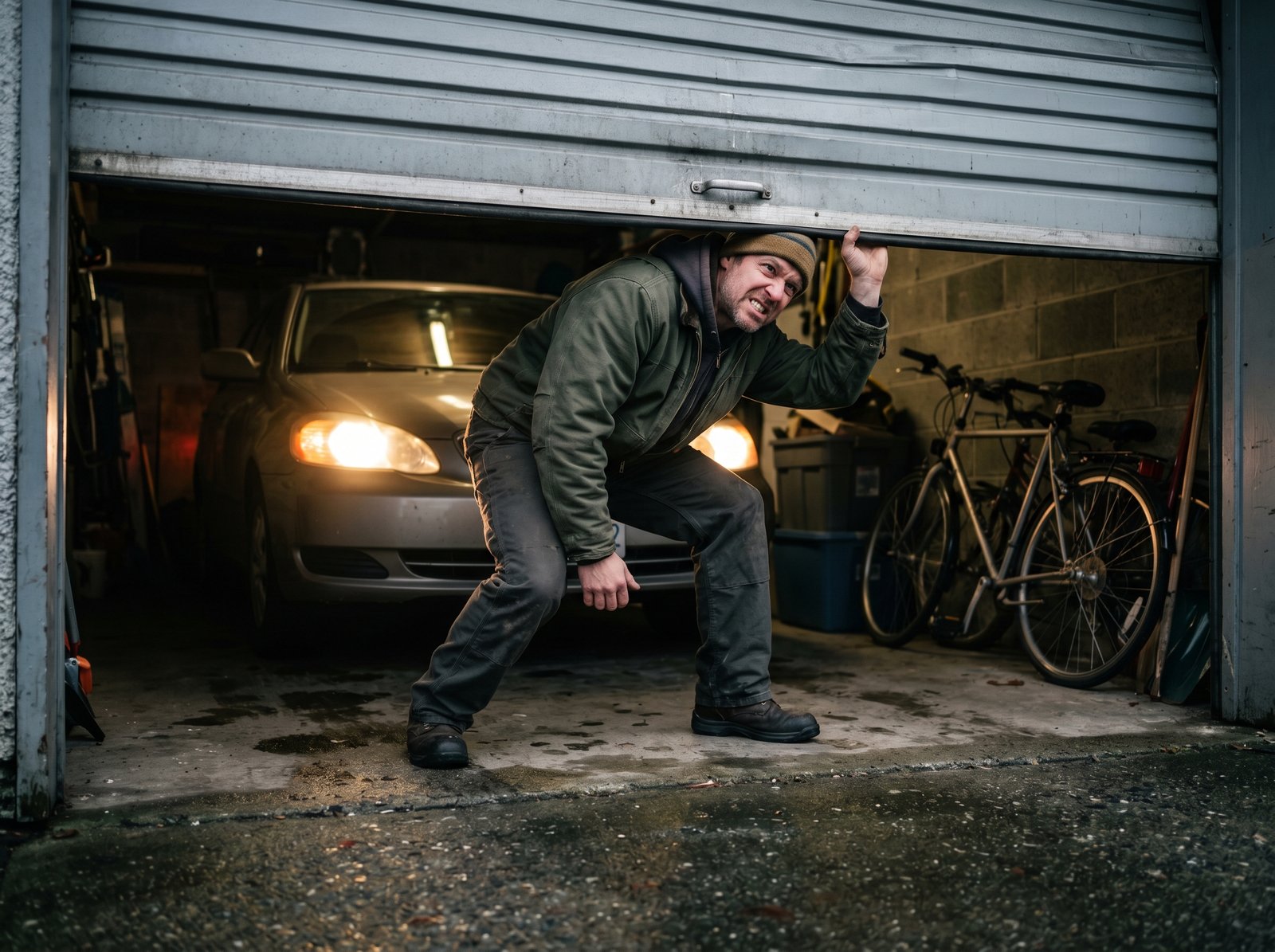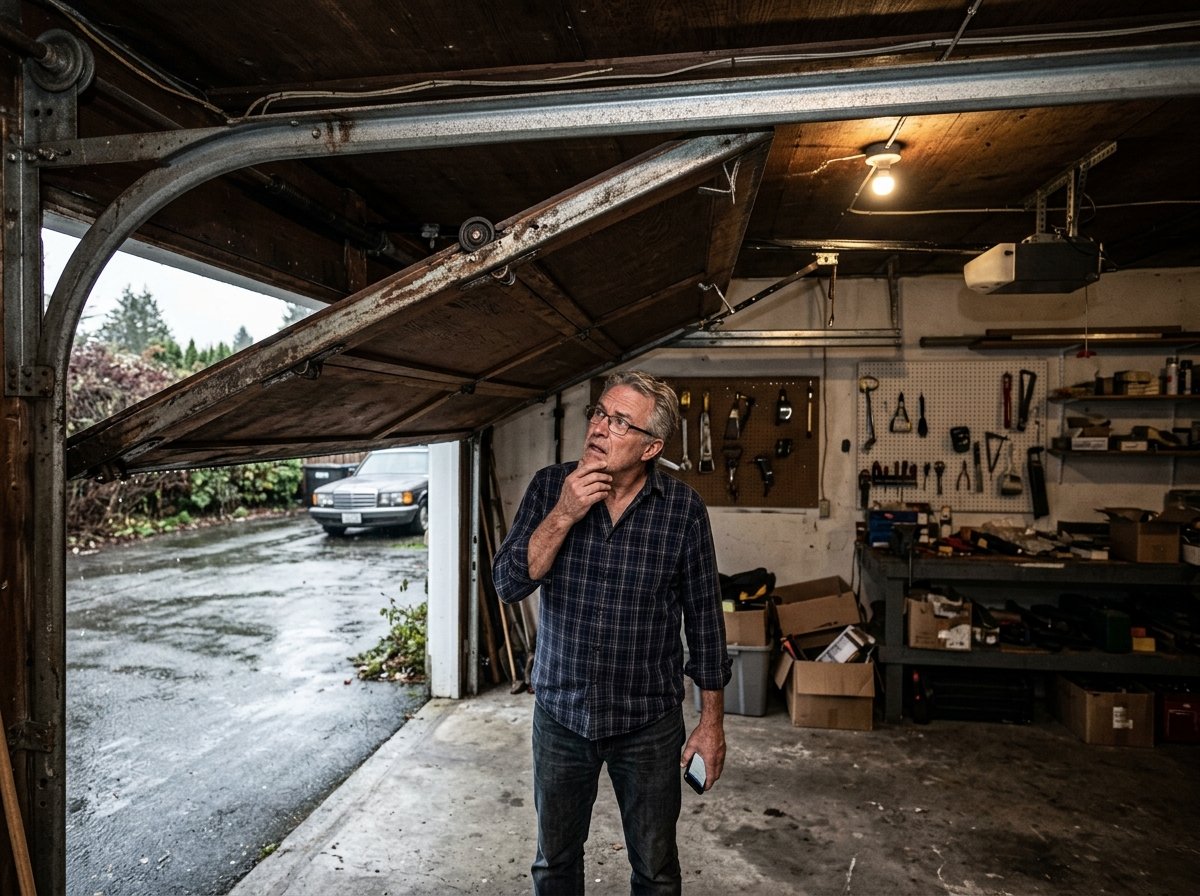
A stuck or damaged door can block your car and leave your home open. Before you search for garage door service near me, stop using the door and note what changed. A broken spring often needs garage door spring repair, while wide panel or frame damage may point to replacement. Dispatch can prepare a likely service path, but the final choice comes after an on-site check.
Quick overview
- The door is stuck open, closed, or halfway.
- The opener runs, but the door does not move.
- A panel, track, cable, or spring looks damaged.
- You do not know whether repair will last.
In this guide
- Clear photos help the technician bring likely parts.
- A safe inspection is needed before any final quote.
Simple version: share the facts, then let the technician inspect the full system.
- Send a full-door photo from inside the garage.
- Send close photos of the damaged part.
- Say whether the door is open, closed, or off track.
- Ask for repair and replacement options when both are possible.
Repair Or Replace: The Fast Answer
- Repair is often possible when one working part has failed and the door is still sound.
- Replacement may make more sense when damage is wide, repeated, unsafe, or parts no longer fit.
- Dispatch can plan the visit, but only an on-site inspection can confirm the best option.
What Repair Or Replacement Means Before Dispatch
Repair means fixing a failed part while keeping the main door system. Replacement can mean one panel, the opener, or the full door. For example, garage door cable repair may solve a lift problem when the panels and tracks are still in good shape. The goal before dispatch is not to guess the answer; it is to send enough detail for a safer and better prepared visit.
Context (what matters in this situation):
- One broken part does not always mean the full door must be replaced.
- A cracked or bent door can hide damage in more than one area.
- Age matters, but condition and part access matter more.
- A low first quote may change after hidden damage is found.
What Dispatch Needs To Hear
Use the Vancouver quote checklist before you call. It helps you give the address, access notes, door size, symptoms, and photos in a clear order. This does not lock in a repair or replacement. It helps the team plan tools, time, and likely parts.
What this usually looks like (real-world flow):
- First, say what happened just before the door failed.
- Next, say where the door stopped and whether it moved by hand.
- Then, describe any bang, scrape, shake, gap, or burning smell.
- Share the door age if known and note past repairs.
- Ask what can be confirmed now and what must wait for inspection.
Details to confirm (so you get the right help fast):
- Door type, width, height, material, and number of panels.
- Opener brand and model if the label is easy to see.
- Parking, alley, gate, ceiling, and power access.
What you should get as the outcome:
- A likely repair visit with common parts.
- A diagnostic visit with repair and replacement choices.
- A replacement measure if the main door is badly damaged.
What Cannot Be Confirmed From A Phone Call
Noise alone does not show which part failed. An opener problem may need garage door opener repair, but the same symptom can come from a spring, track, or door balance issue. Dispatch can note the likely cause. The technician must test the full system before work starts.
Limits / constraints (what can slow things down):
- The exact failed part when several parts move together.
- Whether a bent track can be made safe and straight.
- Whether hidden cracks exist behind hinges or brackets.
- Whether old parts match current replacement parts.
Hidden costs to watch for:
- Ask whether there is a dispatch or diagnostic fee.
- Ask about the labour minimum and added labour time.
- Ask whether parts, hardware, and disposal are included.
- Ask about after-hours fees and hard-access fees.
What To Do Before You Confirm Dispatch
If a panel is split, crushed, or pulled from its frame, ask whether garage door panel replacement is available for your door model. Send photos before the visit when safe. Ask for the likely visit type and fee rules in writing. Do not try to test a door that is hanging, off track, or held by loose cables.
- Confirm the technician is coming to inspect, repair, measure, or do more than one task.
- Confirm what happens if the first repair option is not safe or practical.
Our Recommendations Before You Choose
Ask whether the door needs garage door track repair before any opener work.
Compare the full repair cost with the useful life left in the door.
Replace only the damaged section when the rest of the system is sound and compatible.
Ask for a full-door option when damage affects many parts or keeps returning.
Get the scope, parts, labour, fees, and warranty terms in writing.
Do not approve extra work until the technician explains why it is needed.
Five Safety Steps While You Wait
A door that closes without stopping may need garage door sensor repair. Do not stand under it to test the problem. Keep the area clear and wait for a trained inspection. Safety comes before moving the car.
A good option is:
- Stop using the wall button and remote.
- Keep children and pets away from the garage.
- Do not touch springs, cables, drums, or brackets.
- Do not force the door by hand if it feels heavy or uneven.
- Tell dispatch if the door could fall or block an exit.
Scenario 1: The Door Is Heavy And Will Not Lift
A loud bang followed by a heavy door can point to a spring problem. A technician may recommend torsion spring replacement if that spring is broken and the rest of the door is sound. Do not lift the door alone. Ask dispatch to note that a vehicle may be trapped inside.
Do this:
- Door feels much heavier than normal.
- A spring has a visible gap or break.
- The opener hums but cannot lift the door.
Scenario 2: The Door Shakes Or Jumps
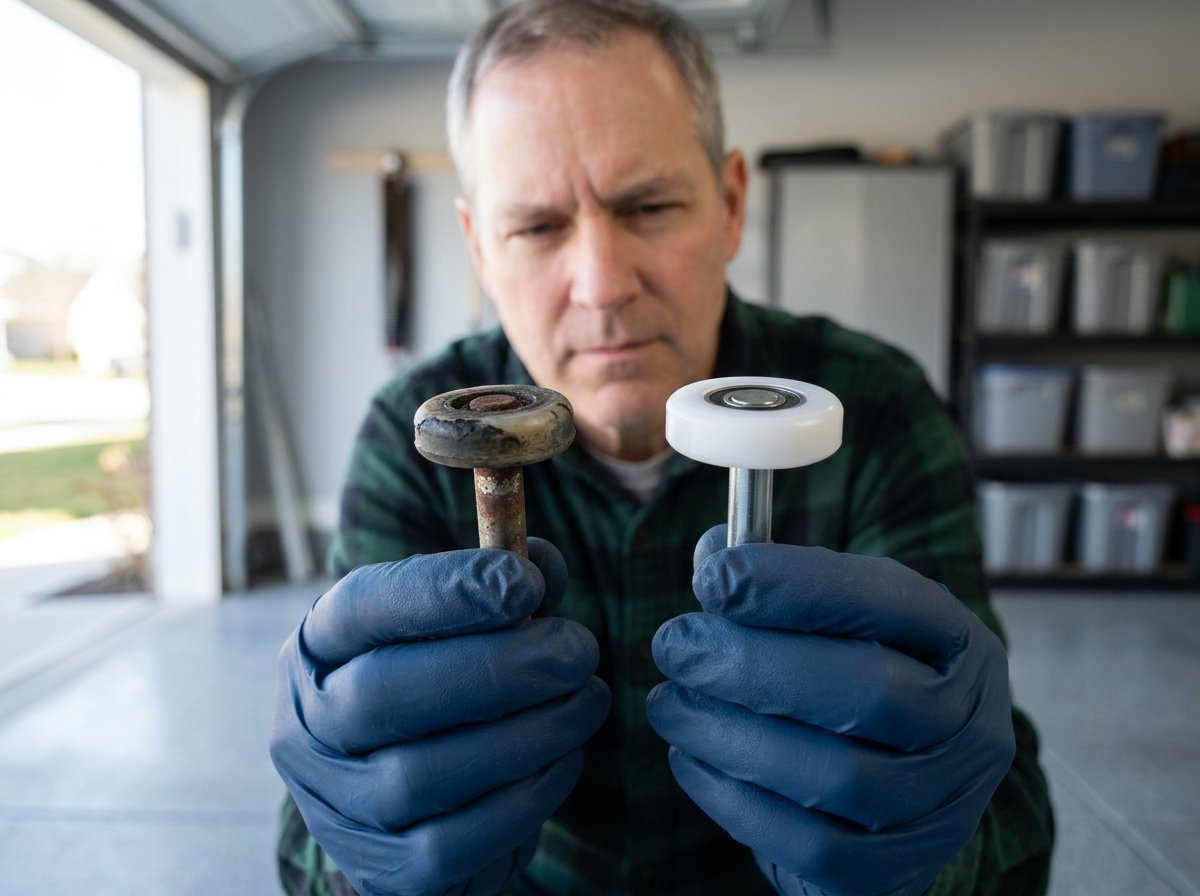
Worn rollers can make the door shake, bind, or move with loud clicks. Garage door roller replacement may be enough when the track, panels, and frame are still straight. If the door has repeated track damage, ask for a wider system check. Stop using it if a roller has left the track.
We recommend this:
- The door moves in short jumps.
- A roller looks cracked, flat, or loose.
- The door rubs one side of the track.
Scenario 3: The Door Has Wide Structural Damage
A loose or bent hinge may be solved with garage door hinge replacement. Replacement becomes more likely when several panels, hinges, tracks, or the frame are damaged together. Send full-door photos so dispatch knows this may need both a repair check and a measure. Keep the door still until it is inspected.
Here’s a simple path forward:
- More than one panel is bent or split.
- The door no longer sits square in the opening.
- Old parts are hard to match or damage keeps returning.
Suggested plan:
Step 1: Send The Main Facts
Use these seven booking questions to collect the key details. Include the full address, access point, door position, visible damage, and whether a car is trapped. Add clear photos when it is safe to take them. Ask dispatch to repeat the visit type back to you.
Step 2: Share Safe Access Details
Give the closest lane, alley, gate, unit, or landmark. Say if the garage has low clearance, limited parking, no power, or a locked entry. Keep your phone on for arrival updates. Do not wait under or beside the damaged door.
Step 3: Choose The Closest Service Path
Make sure the team knows which door is affected. A separate sliding door repair or patio door repair request needs different parts than an overhead garage door. For a garage door, choose the closest likely issue below. The technician can change the plan after inspection.
Garage Door Opener Safety Check
The U.S. Consumer Product Safety Commission explains why a non-reversing opener can be unsafe and when replacement may be safer than adjustment. Use this as general safety guidance, not as Vancouver code or a diagnosis. The garage door opener safety guidance can help you describe what the door does before dispatch. A technician should still inspect the system in person.
Garage Door Repair Or Replacement FAQs
Can dispatch tell me if I need a new garage door?
Dispatch can give a likely path from your photos and symptoms. It cannot confirm hidden damage, door balance, or part fit by phone. Ask for an on-site inspection before you approve a full replacement.
What fees should I confirm before the visit?
Check the five fees to confirm before emergency service. Ask about dispatch, labour minimums, parts, after-hours work, and hard access. Request the fee rules in writing when possible.
Is a broken spring a repair or a full replacement?
A broken spring is often a part repair when the door, tracks, and panels are still sound. The technician must also check cables, bearings, balance, and door weight. Wide damage or poor part fit can change the plan.
Does a cold or wet garage mean the door needs replacement?
Not always. Gaps and drafts may improve with garage door weather stripping replacement if the door still fits the opening. Rust, rot, bent sections, or repeated water damage may support a larger replacement.
Should I keep using the opener until the technician arrives?
No if the door is uneven, off track, hanging, or making sharp new sounds. Stop using the remote and wall control. Tell dispatch the door may be unsafe.
Can I get both repair and replacement prices at the visit?
Ask for both when the damage is wide or the door is old. The technician may need to measure the opening and check part access first. Compare the full scope, safety, useful life, and warranty before deciding.