If your garage door won’t open in Vancouver but the opener still runs, stop before you force it. The door may be disconnected, too heavy, or jammed in the track. A safe check from garage door opener repair can find out if the problem is the trolley, spring, cable, or opener gear.
Quick overview
- The motor runs but the door does not move.
- The chain or belt moves with no lift.
- The door lifts a little, then drops or stops.
- The red release cord looks loose or was pulled already.
In this guide
- A tech should check the heavy parts before the opener is reset.
- Clear photos of the opener rail and door can help before service.
Simple version: do not guess with a stuck door.
- Keep people and pets away from the door.
- Do not keep pressing the remote.
- Do not pull the release cord if the door is open or crooked.
- Call for help if the door feels heavy or unsafe.
TLDR: Why The Opener Runs But The Door Does Not
- The trolley may be released, broken, or not locked in.
- A broken spring or cable can make the door too heavy to move.
- A stripped opener gear, loose chain, or jammed track can stop the lift.
What It Means When The Opener Runs
When the opener runs but the door stays down, the problem is often between the motor and the door. In many Vancouver homes, a broken spring can make the opener sound busy while nothing moves. Start with a safe check, then book garage door spring repair if the door feels heavy or you heard a sharp snap.
Context (what matters in this situation):
- The opener rail may move but the trolley may not pull the door.
- The emergency release may be open and not reconnected.
- The opener gear may spin inside the motor case.
- The door may be jammed by a track, roller, or cable issue.
The Common Story Behind This Problem
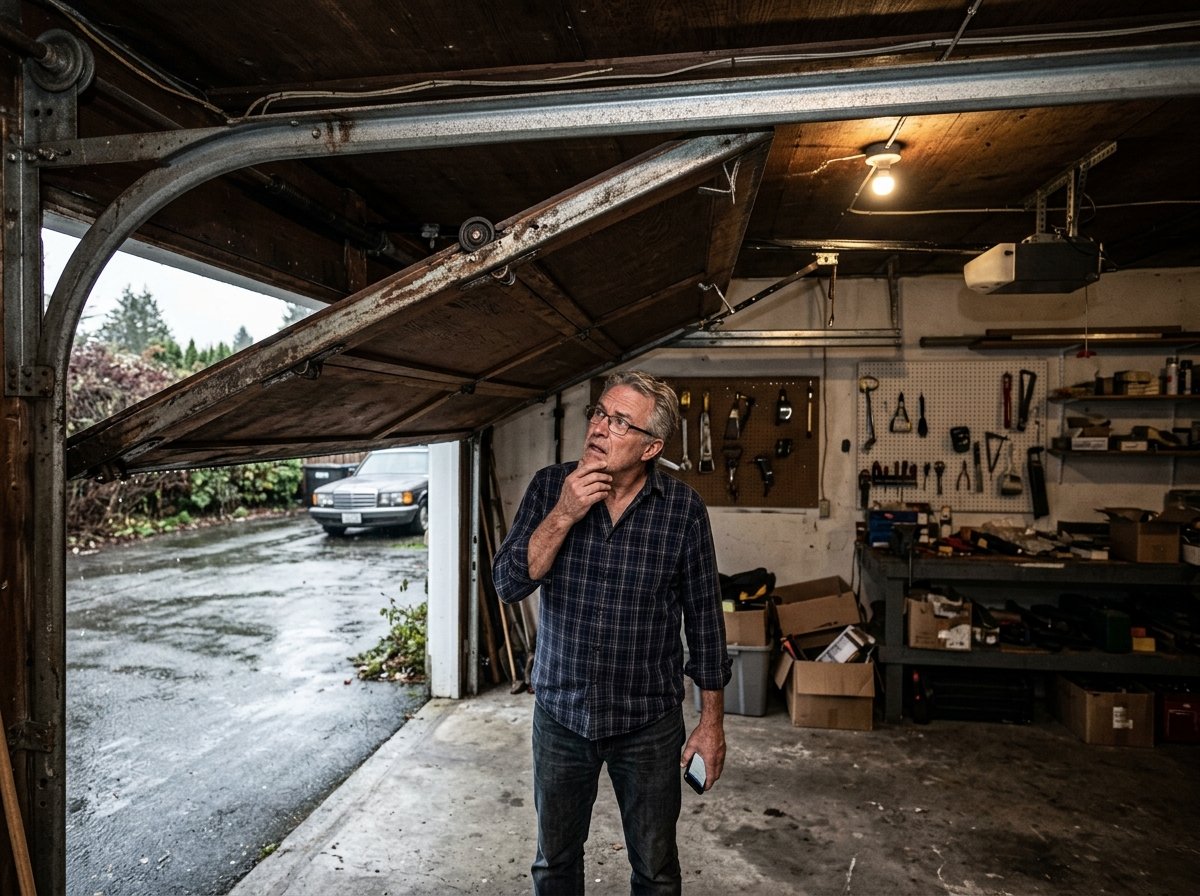
Most calls start the same way: someone presses the wall button, hears the opener, and the door does not move. That can feel like a small opener issue, but a loose cable can turn it into a safety problem. If the door sits unevenly, ask about garage door cable repair before anyone tries to lift it.
What this usually looks like (real-world flow):
- You press the remote and hear the opener run.
- The door does not rise, or it rises only one inch.
- You look up and see the rail or chain moving.
- Someone suggests pulling the red cord.
- The safer move is to stop and check the door parts first.
Details to confirm (so you get the right help fast):
- A disconnected trolley is simple only when the door is balanced.
- A broken spring can make the door too heavy for safe hand lifting.
- A worn gear can let the motor run with no door movement.
What you should get as the outcome:
- If the door is safe and balanced, the opener can be reconnected.
- If the door is heavy, the spring or cable issue comes first.
- If the rail or gear is damaged, the opener may need repair.
Membership Plans And Hidden Costs To Check
A home plan or warranty may not cover every stuck door cause. Before you wait on a long hold, compare your issue with this garage door won’t open guide and ask what is covered.
Limits / constraints (what can slow things down):
- Some plans cover opener motors but not broken springs.
- Some plans do not cover wear, rust, or impact damage.
- Some plans need pre-approval before work starts.
- Some plans send a general repair vendor, not a door tech.
Hidden costs to watch for:
- Ask if diagnosis has a fee.
- Ask if after-hours service changes the price.
- Ask if opener parts are billed apart from labour.
- Ask if a return visit has a second charge.
What To Do Right Now
Stay clear of the door, stop pressing the button, and look for obvious signs like a broken spring, slack cable, or crooked panel. If the door is blocking a vehicle or entry, ask for emergency garage door repair and mention whether the sensors are blinking so garage door sensor repair can be checked too.
- Take one photo of the opener rail and one photo of the door.
- Tell the dispatcher if the door is open, closed, crooked, or hanging.
Our Recommendations Before You Force The Door
Do not keep cycling the opener. It can strip gears or make the chain slip.
Do not pull the red release cord if the door is open or crooked.
Check if the door lock is engaged before calling it an opener failure.
Listen for one loud bang. That often means a spring broke.
Look at both sides of the door for slack cables.
Ask for a door balance check before any opener reset.
Safety Steps For A Door That Will Not Move
A stuck garage door can drop fast if the lift system is broken. If you see a gap in the spring or the door feels too heavy, leave it alone and book torsion spring replacement instead of pulling the cord.
A good option is:
- Move kids, pets, and vehicles away from the door.
- Stop using the wall button and remote.
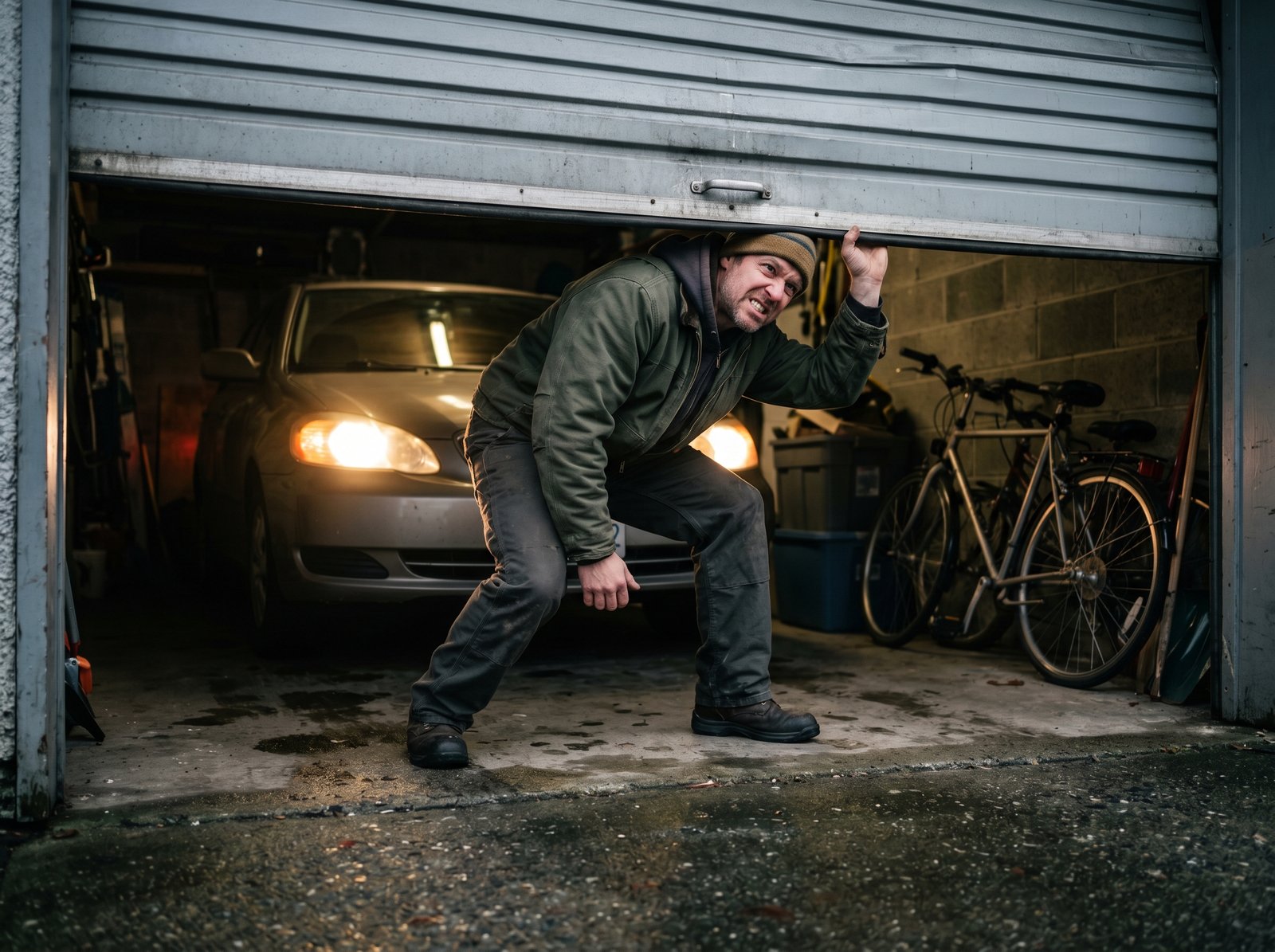
- Do not stand under a door that is partly open.
- Do not loosen brackets, cables, or springs.
- Wait for a tech if the door is heavy, tilted, or noisy.
Scenario 1: Your Car Is Trapped Inside
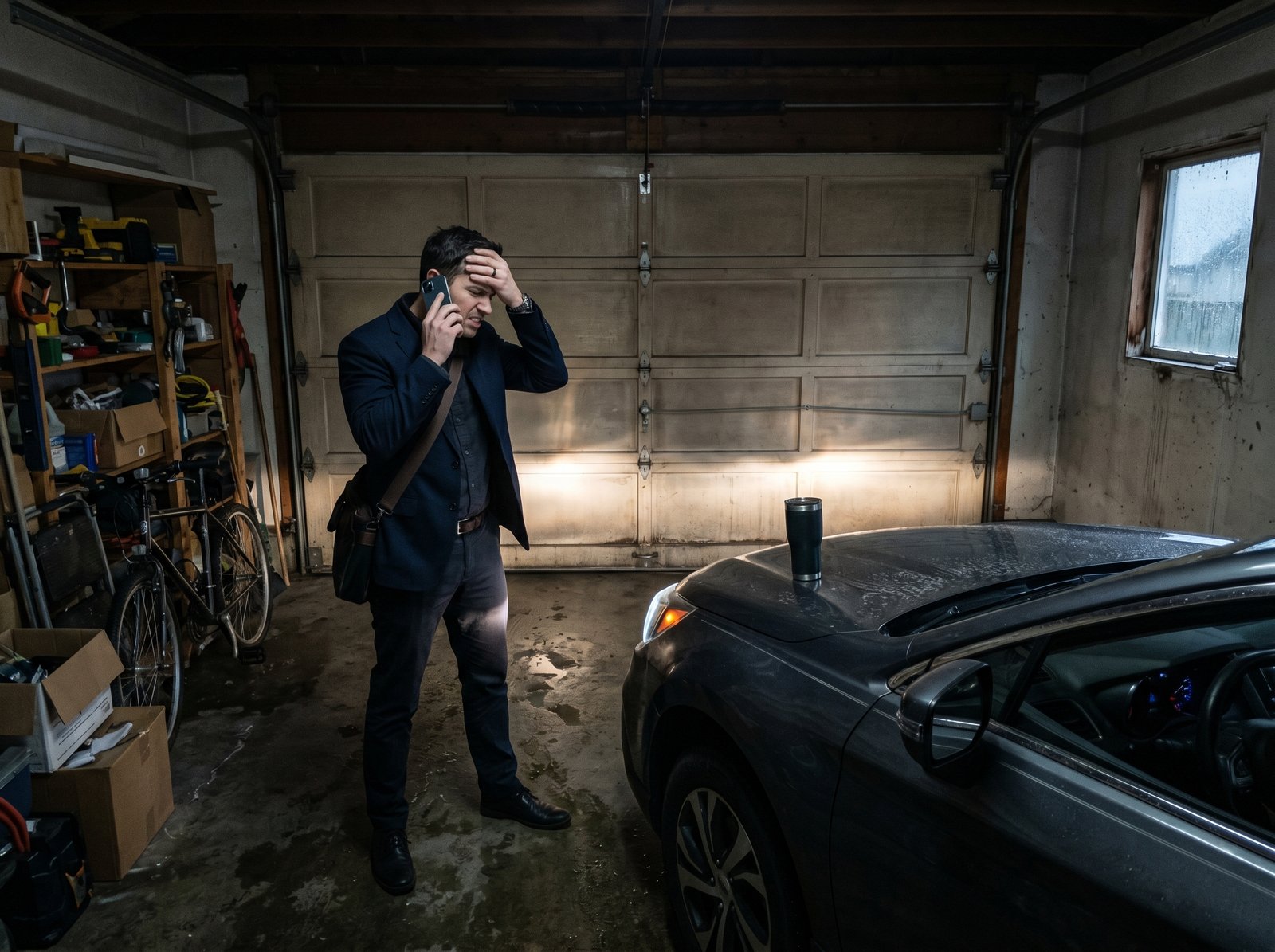
If the opener runs but the door stays shut, the first goal is safety, not speed. This can happen in busy buildings, laneways, and tight garages. If the door is stuck downtown, this trapped car garage door guide explains what to check before you try to move the door.
Do this:
- Tell dispatch if the car must leave soon.
- Do not force the door with the car close to it.
- Keep the opener stopped until the door is checked.
Scenario 2: Someone Wants To Pull The Red Cord
Pulling the release cord can help only when the door is safe and balanced. If the door is open, crooked, or heavy, it can drop. Before you do that near a busy street or lane, read this Commercial Drive stuck door guide.
We recommend this:
- Do not pull the cord while standing under the door.
- Do not pull it if the door has a broken spring.
- Do not pull it if a cable is loose or off the drum.
Scenario 3: The Door Jerks Then Stops
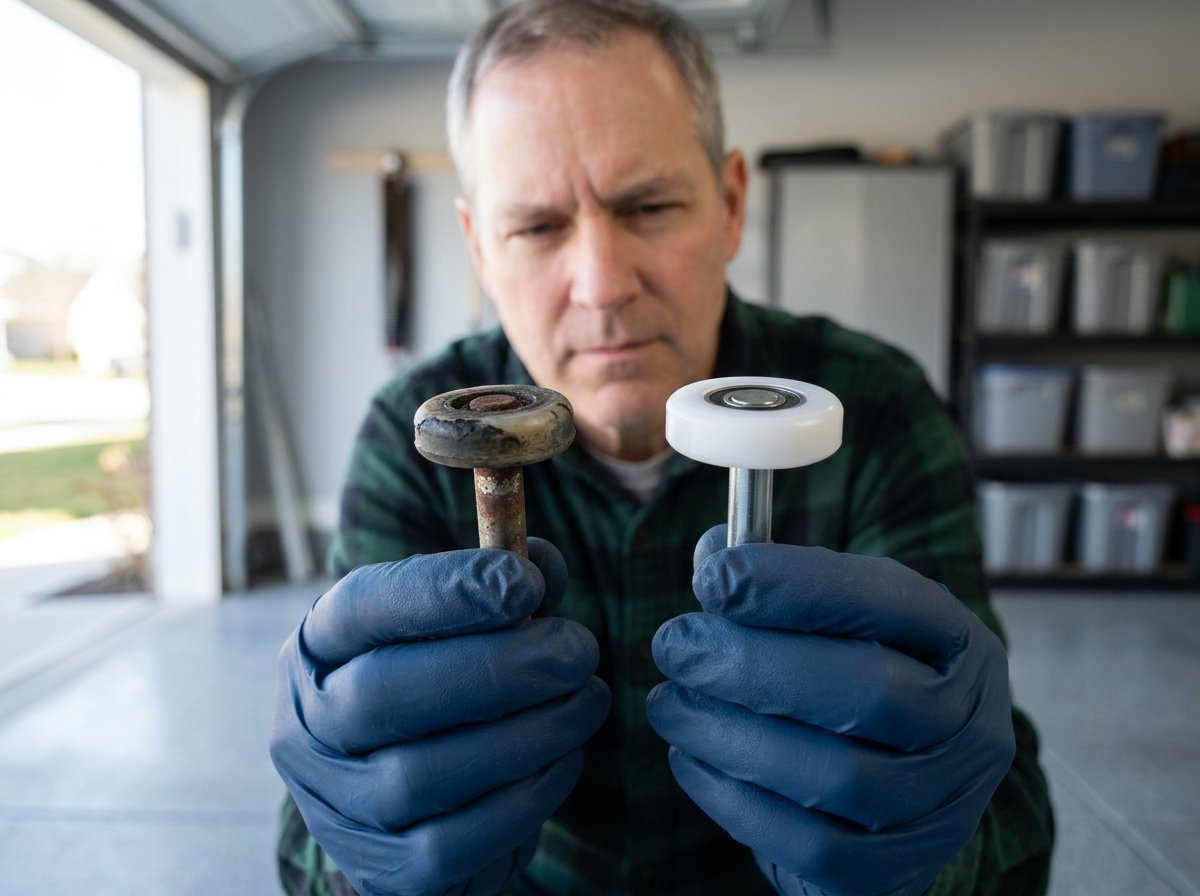
A jerking door may have worn rollers, a bent track, or a bad hinge. If the opener keeps running against that drag, it can make the repair worse. Ask about garage door roller replacement if the door shakes, scrapes, or sticks in one spot.
Here’s a simple path forward:
- Watch for one side rising before the other.
- Listen for scraping in the track.
- Stop if the door binds or jumps.
Suggested plan:
Step 1: Book The Right Repair Type
Say that the opener runs but the door does not move. Mention if the chain moves, if the trolley is loose, and if the door feels heavy. If the door grinds or stops halfway, include garage door track repair as a possible check.
Step 2: Share The Location Clearly
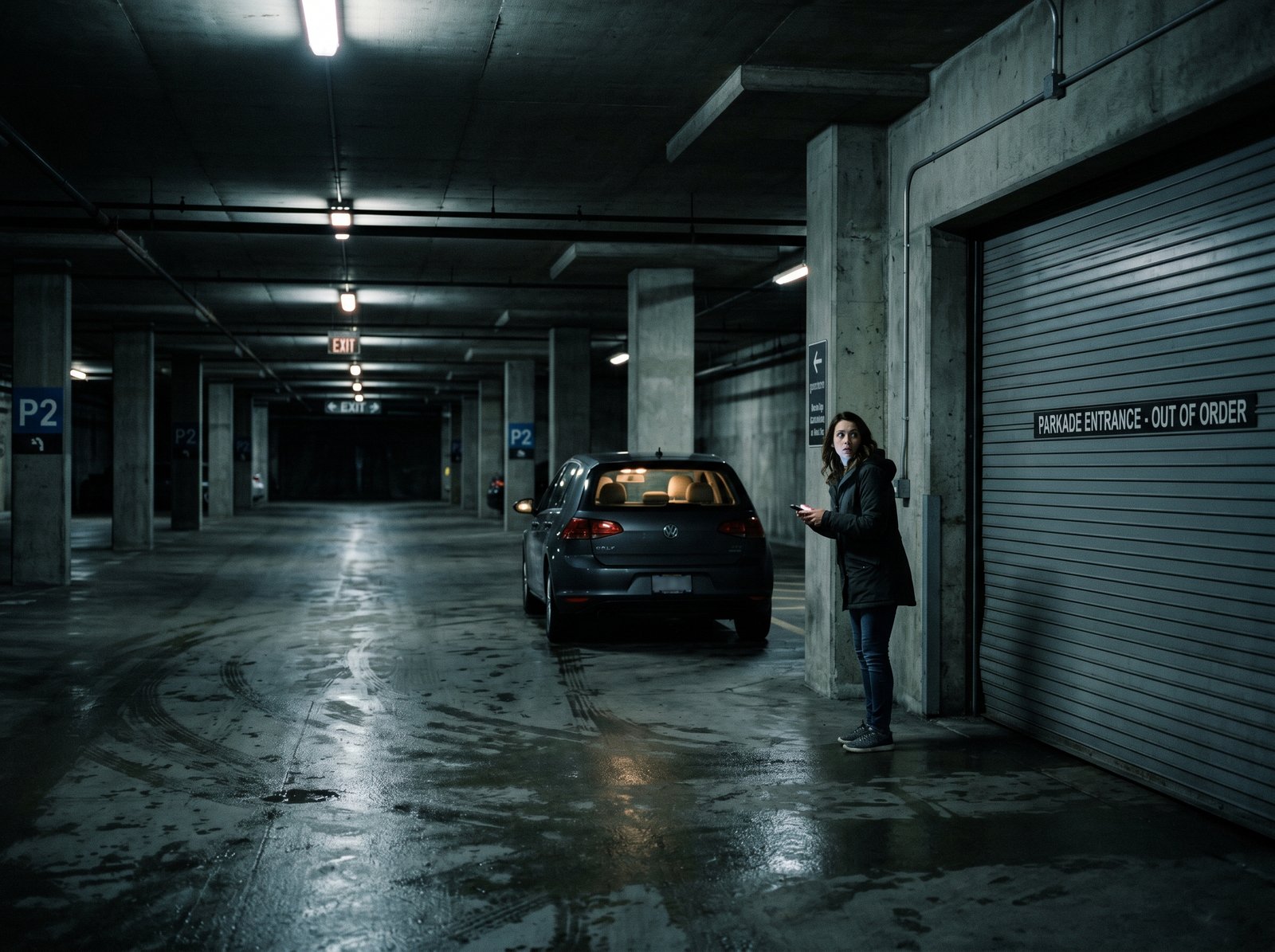
Give the address, unit number, alley access, parkade gate code, and closest cross street. Say if the tech needs to call from outside or meet you at a side door. A clear location helps the right tools reach the right door.
Step 3: Pick The Closest Issue
Choose the symptom that matches the door, not the part you hope is broken. A cracked panel points to panel replacement, a cold gap points to weather stripping replacement, and a loose side part can point to hinge replacement.
Garage door operator safety standard
This safety note helps you understand why an opener is not just a motor. The ANSI/CAN/UL 325 update explains that door operators are tied to safety rules in Canada and the United States. It is useful when your opener runs but the door does not move, because the fault may involve sensors, force settings, or the release system. Use it as background, then let a trained technician check the heavy parts.
FAQs About A Garage Door Opener That Runs But Does Not Lift
Why does my opener run but the garage door stays shut?
The opener may be disconnected from the door, or the door may be too heavy to lift. A broken spring, loose cable, or stripped gear can all cause this. Stop using the remote until the door is checked.
Should I pull the emergency release cord?
Only pull it when the door is fully closed and looks straight. Do not pull it if the door is open, crooked, or has a broken spring. That can make the door fall or slam shut.
Can a bad sensor stop the door from opening?
Sensors usually stop a door from closing, but blinking sensors can still confuse the opener. Dirt, bumped brackets, or wiring can be part of the issue. If the lights blink or the door reverses, mention that when you book.
Can I lift the garage door by hand?
Only try by hand if the door is fully closed, the release is safe to use, and the door feels light. If it feels heavy, stop. A balanced door should not feel like a dead weight.
What if the chain moves but the door does not?
The trolley may be released, broken, or not locked into the carriage. The chain can also move while a gear inside the opener is stripped. If the door also sits crooked, ask for cable repair services before resetting the opener.
How fast should I call for help?
Call as soon as the door is blocking your car, stuck open, or unsafe to touch. If you heard a snap or saw the door drop, stop using it. If the door is open near the street, say that clearly so the risk is understood.