When a garage door traps your car inside, do not force the opener or pull loose parts. For emergency garage repair vancouver bc calls, first check if the door is crooked, loud, or stuck on one side. Use these emergency quote questions before booking, and ask if garage door spring repair may be part of the visit.
Quick overview
- Your car is inside and you need to leave soon.
- The opener hums but the door does not lift.
- The door is crooked or stuck half open.
- You are not sure if it is safe to pull the release cord.
In this guide
- Clear issue notes help the technician bring the right parts.
- Photos of springs, tracks, and opener lights can cut down guessing.
Simple version: treat a trapped car like a safety problem first.
- Stop using the wall button and remote.
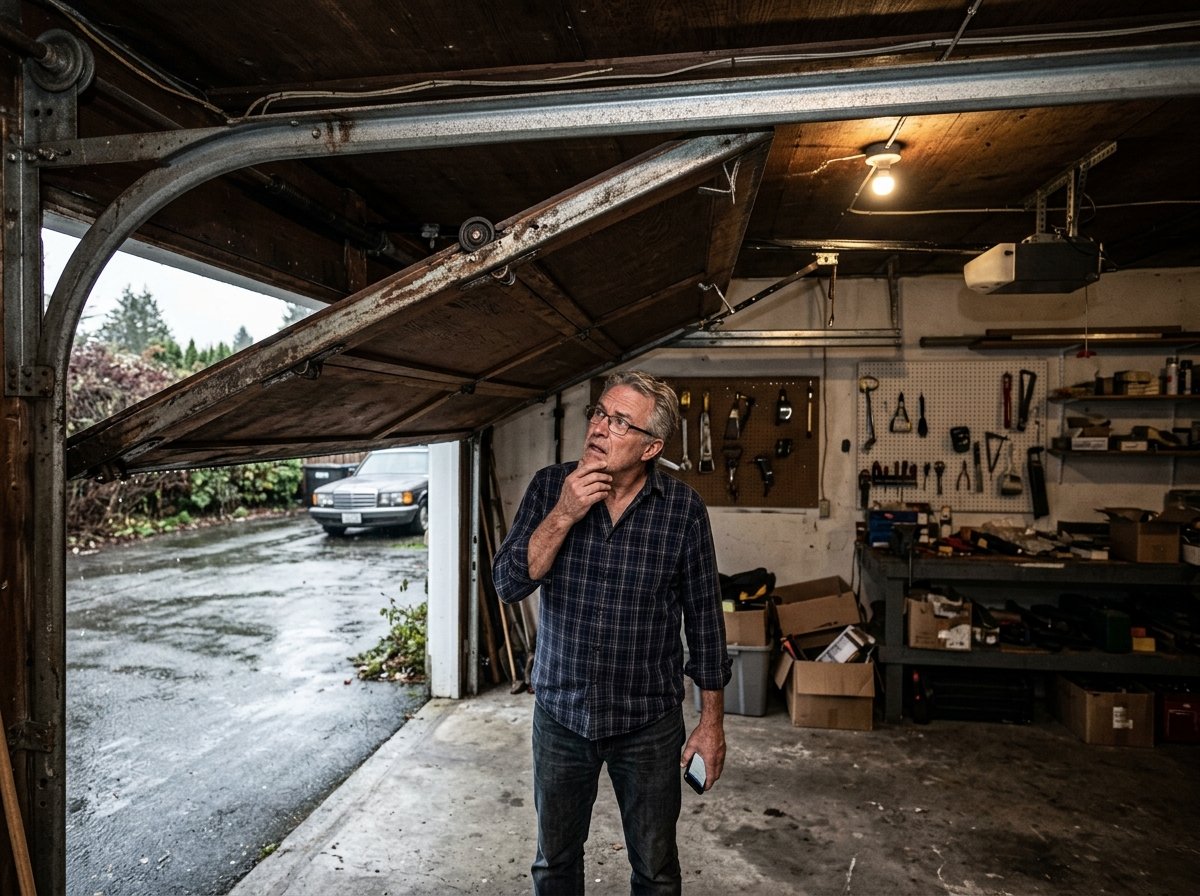
- Look for loose cables, tilted panels, or broken rollers from a safe spot.
- Take clear photos before you call.
- Ask what parts may be needed before you approve repair work.
TL;DR: Car Trapped Inside A Garage In Vancouver
- Do not force a stuck garage door to free the car.
- Tell dispatch if the door is crooked, noisy, or stuck on one side.
- Ask for the ETA, service fee, and likely parts before booking.
What It Means When Your Car Is Trapped Inside
A trapped car usually means the door cannot lift safely or the opener cannot move it. The cause may be a broken spring, snapped cable, blocked sensor, dead opener, or bent track. If the door hangs unevenly, ask about garage door cable repair. If the motor runs but nothing moves, ask about garage door opener repair.
Context (what matters in this situation):
- A broken spring can make the door too heavy to lift.
- A loose cable can let one side rise higher than the other.
- A blocked sensor can stop the opener from closing or moving right.
- A bent track can make the door jam before the car can get out.
A Realistic Morning Door Failure
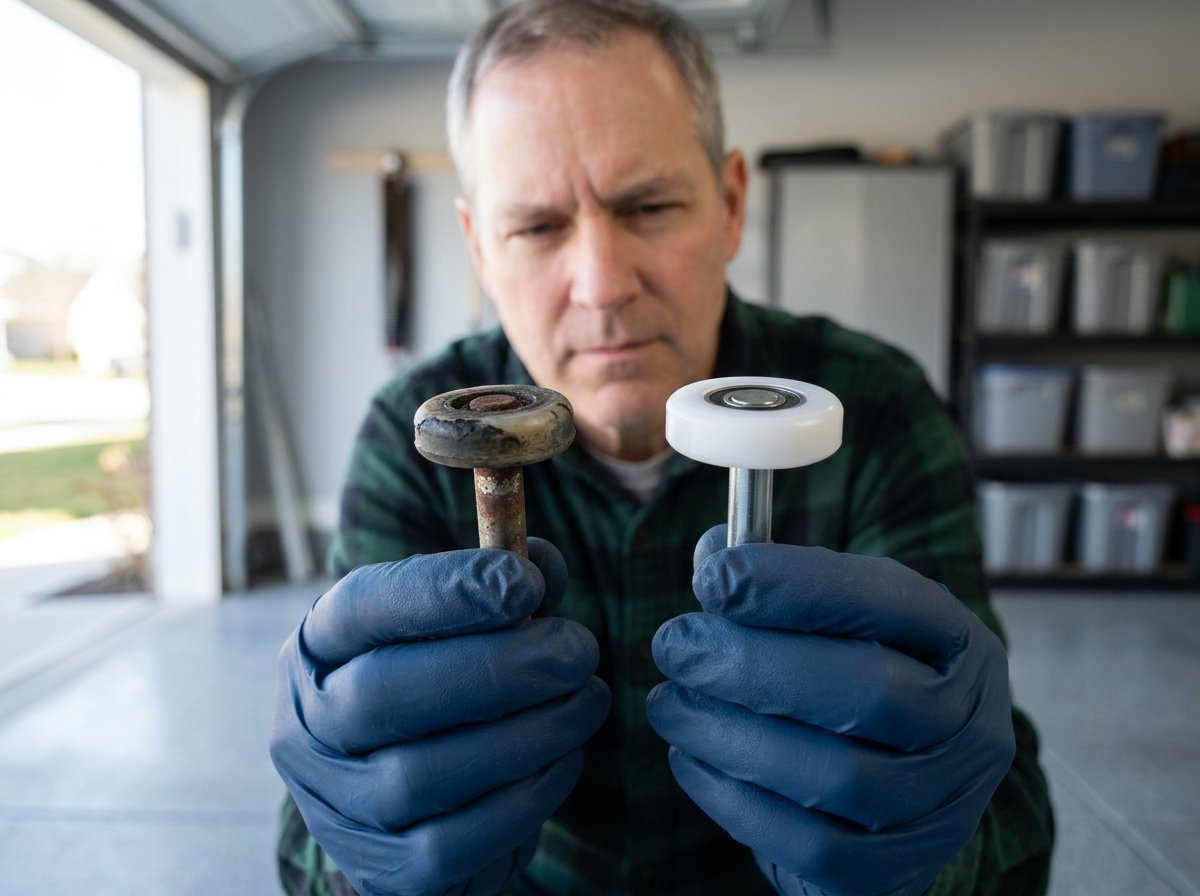
Picture this: you press the remote before work, the opener groans, and the door lifts two inches. Stop there. A jammed track or roller problem can get worse fast, so ask if garage door track repair or garage door roller replacement fits the symptoms.
What this usually looks like (real-world flow):
- You press the remote once and hear a loud pop.
- The opener light turns on, but the door barely moves.
- One side of the door looks lower than the other.
- You think about pulling the red cord.
- You stop and call before the door drops or bends more.
Details to confirm (so you get the right help fast):
- Check if the opener is plugged in, but do not remove covers.
- Look at the spring from a distance, not with your hands.
- Move people away from the door path.
What you should get as the outcome:
- You avoid making a small repair larger.
- The technician gets better notes before arrival.
- Your car has a safer chance of being released.
Check Plan Limits Before You Assume It Is Covered
Some home plans or memberships cover small service calls but not parts. A trapped car can involve alignment, hinges, or safety eyes. Ask if garage door hinge replacement or garage door sensor repair is included before you approve work.
Limits / constraints (what can slow things down):
- Ask if the visit fee is separate from the repair price.
- Ask if parts, labour, and after-hours fees are included.
- Ask if the quote changes if the door is heavy or commercial style.
- Ask if the technician can release the car before full repair starts.
Hidden costs to watch for:
- A second spring may be recommended if one has failed.
- A damaged cable drum or bracket may add cost.
- A bent panel can need parts beyond basic adjustment.
- Parking access, condo access, or waiting time can affect timing.
What To Do Right Now
Do not yank the door just to free the car. Use the same calm steps you would use for a door stuck open overnight: secure the area, take photos, and ask if torsion spring replacement is safe to inspect.
- Call with the door size, symptom, and whether your car is blocked in.
- Ask for a clear ETA, service fee, and what not to touch while you wait.
Our Recommendations Before You Force The Door
Do not pull the release cord if the door is not fully closed.
Do not stand under the door to inspect springs or cables.
Send photos of both sides of the door before the visit.
Ask if the car can be released before the full repair is done.
Confirm the service fee and parts range before approval.
Keep the garage clear so the technician can work safely.
Safety Steps Before A Technician Arrives
If the door is bent or hit by a car, do not push on the panels. A weak section may need garage door panel replacement, and forcing it can make the door drop.
A good option is:
- Step 1: Move people, pets, and bikes away from the door.
- Step 2: Turn off the opener only if you can reach it safely.
- Step 3: Take photos without touching cables, springs, or brackets.
- Step 4: Leave the red release cord alone if the door is crooked.
- Step 5: Keep the driveway clear for the service vehicle.
Scenario 1: Kids Or Family Are Waiting
If kids are waiting, keep them away from the door and springs. Use the same safety mindset as kids waiting inside: no pulling, no climbing, and no standing under a stuck door.
Do this:
- Keep everyone in another room if possible.
- Do not let anyone play with the wall button.
- Tell dispatch if someone needs the car soon.
Scenario 2: You Need The Car For Work
Say that the vehicle is trapped when you call. This helps dispatch understand the urgency and ask better questions about the door. Do not try to lift the door with another person unless a technician says it is safe.
We recommend this:
- Share your nearest cross street or parking access note.
- Ask if photos can be sent by text or form.
- Ask if a safe release is possible before full repair.
Scenario 3: The Door Opens A Little Then Stops
Stop after the first sign of strain. A door that opens a few inches can still be under heavy spring tension. Pressing the opener again can bend the track, pull a cable, or crack a panel.
Here’s a simple path forward:
- Listen for a pop, grind, or click.
- Check if one side is lower than the other.
- Tell the technician exactly how far it moved.
Suggested plan:
Step 1: Take Photos Before You Call
Take a photo of the full door, both tracks, the opener light, and any loose cable you can see from a safe spot. These photos help the repair team understand the problem before arrival.
Step 2: Share Your Location And Power Clues
Tell dispatch your address, nearest cross street, and whether other power items are out. If the opener has no lights, note that too. Use the resource section below if you need to check a wider outage.
Step 3: Match The Symptom To The Right Service
Tell the technician what you saw first: a gap, a crooked panel, a stopped opener, or a loud pop. The right service depends on the symptom, not just the fact that the car is stuck.
BC Hydro outage map
If your opener has no power, check the BC Hydro outage map before you keep trying the wall button. It can help you see if the issue may be a wider outage. Still, do not pull springs, cables, or opener parts. Use the manual release only when the door is fully closed and safe.
FAQs About A Car Trapped Inside A Garage
Can I pull the red release cord if my car is trapped?
Only do this when the door is fully closed and looks level. If a spring or cable is broken, the door can drop fast. When in doubt, leave it for a technician.
Should I keep pressing the opener?
No. If it hums, strains, or clicks, stop. Repeated tries can bend a track or burn out the opener.
What should I tell dispatch?
Tell them your address, door size, opener model if you can see it, and what the door did first. Send photos of springs, cables, rollers, and sensor lights.
Will this be fixed the same visit?
Sometimes, but it depends on the part, door weight, and damage. Ask what parts may be needed before approving the work. No company can promise every repair without checking the door.
What if the car is needed for school or work?
Say that first when you call. Ask for a clear ETA and what to do while you wait. Keep the area clear so the technician can reach both sides of the door.
Is emergency garage repair vancouver bc different from a normal repair?
The main difference is urgency. The safety check is the same: do not force the door, keep people back, and explain the symptoms clearly.